
Urban Circular Economy:
Strategies for Minimising Waste and Maximising Resource Efficiency in Cities
Imagine living in a city that functions like nature, where everything is recycled and never thrown away. This process is called an urban circular economy, a system which aims to reduce waste, keep materials in use for longer, and regenerate resources where possible. Sharing, renting, reusing, repairing, refurbishing, and recycling are all elements of this process. This approach helps cities reuse resources, cut waste, and protect the environment.
Understanding the Circular Economy: How Does it Work?
Think of the circular economy as a continuous loop. Unlike our current “take-make-waste” linear model—where we simply buy, use, and discard—this system strives to keep materials in circulation indefinitely. As the figure below illustrates, raw materials don’t have to end up in a landfill; instead, they can be repaired, reused, or recycled, allowing resources to flow back into the system or nature, completing the circle that gives this concept its name1Ellen MacArthur Foundation, “Circular Economy Introduction: Overview”, no date, https://www.ellenmacarthurfoundation.org/topics/circular-economy-introduction/overview.
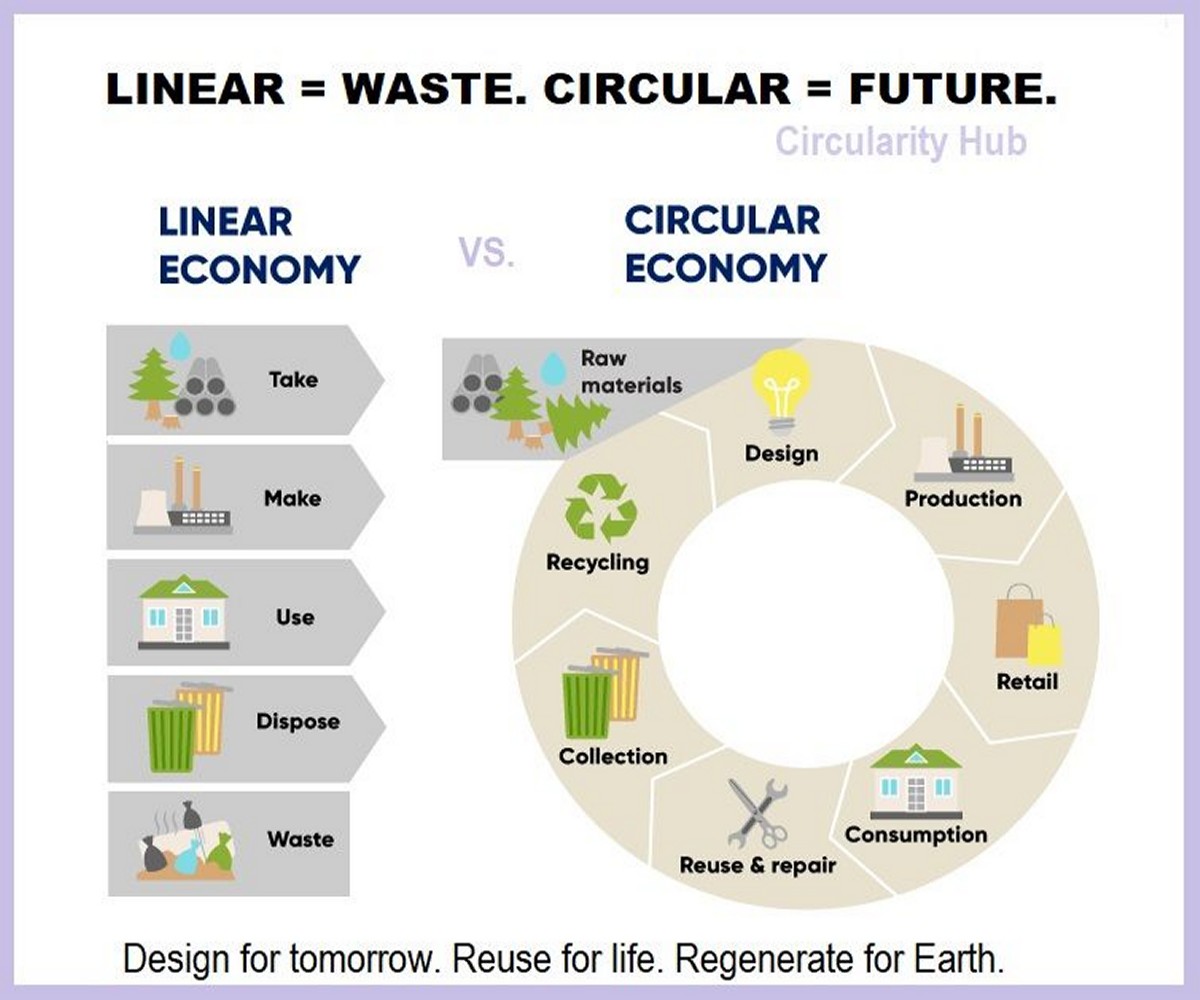 Figure 1: Comparative Analysis of Circular and Linear Economic Models2Circularity Hub, “Linear = Waste. Circular = Future”, LinkedIn, November, 2025, https://www.linkedin.com/posts/sustainability-infographics_circulareconomy-sustainability-climateaction-activity-7376566479497940992-sKzX
This transformative approach is built on three core pillars:
- eliminating waste and pollution,
- circulating products and materials,
- and regenerating nature.
Transitioning to this model is a significant challenge in a society geared toward consumerism. However, it offers a vital path to tackling climate change and biodiversity loss by decoupling economic activity from finite resource consumption3Ellen MacArthur Foundation, “Circular Economy Introduction.”. We can foster a thriving economy and create jobs without exhausting all of Earth’s resources, protecting both our environment and our future economic wellbeing.
Visualising the Flow: The Butterfly Diagram
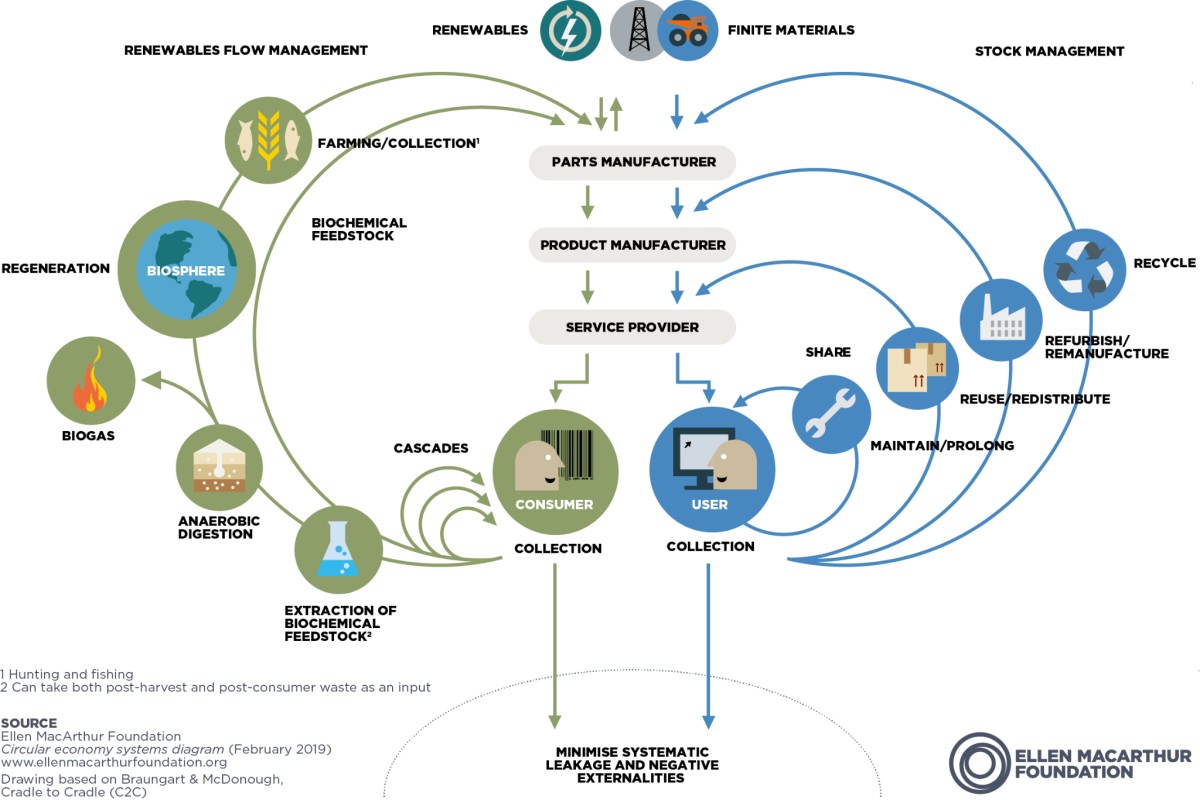
The Butterfly Diagram above by the Ellen MacArthur Foundation illustrates a circular economy designed to eliminate waste by keeping materials in continuous use. It is divided into two main cycles: the Biological Cycle (left), which focuses on regenerating nature by returning organic materials like food and wood to the earth through composting or anaerobic digestion, and the Technical Cycle (right), which manages finite materials like metals and plastics. The Technical Cycle emphasises keeping products in use as long as possible through maintenance, sharing, and refurbishing, viewing recycling as a final resort when a product can no longer be repaired. The goal of the Biological Cycle is to let these materials return to the earth to “regrow” the system. Ultimately, the goal is to “design out” waste, ensuring that resources flow back into the system rather than leaking into landfills or polluting the environment4Ellen MacArthur Foundation, “Circular Economy Introduction.”.
Here is a video explaining the above butterfly diagram in more detail:
The Origins of the Movement
While these concepts have evolved over decades through the work of visionaries like William McDonough and Michael Braungart, the Ellen MacArthur Foundation has been instrumental in bringing them into the 21st-century spotlight. Dame Ellen’s own journey, sparked by her experiences sailing solo around the world, explains why she is such a passionate advocate for this global shift:
How does an urban circular economy come to life?
In simple terms, an urban circular economy is about a city learning to waste as little as possible. Instead of the usual routine where we buy something, use it, and throw it away, a circular city treats everything as a valuable resource that can be used again5Ellen MacArthur Foundation, “Cities in the Circular Economy: An Initial Exploration”. 1 August, 2017. https://www.ellenmacarthurfoundation.org/cities-in-the-circular-economy-an-initial-exploration. This works by encouraging people to share items like cars or tools, repairing broken items instead of replacing them, and turning food scraps into fertiliser for city parks6OECD Urban Studies. “The Circular Economy in Cities and Regions”. OECD. 28 October 2020. https://www.oecd.org/en/publications/the-circular-economy-in-cities-and-regions_10ac6ae4-en.html. By rethinking how buildings are made and how energy is consumed, cities can grow their economies without needing to constantly dig up new raw materials, ultimately creating a cleaner and more affordable place to live7C40 Cities Climate Leadership Group. “Circular Economy”. C40 Cities Knowledge. 2026. https://www.c40knowledgehub.org/s/topic/0TO1Q0000001lh0WAA/circular-economy?language=en_US.
Why are cities the key to this transition?
Cities are the engines of the global economy, but they also have the largest environmental footprint. Cities use massive amounts of energy and are the biggest contributors to waste production. For example, cities consume about 75% of global primary energy and emit between 50 and 60% of the world’s total greenhouse gases8UN Habitat, “Urban Energy”, 2026. https://unhabitat.org/topic/urban-energy, and urban contexts are also the biggest source of post-consumption food waste, using between 70% and 80% of the world’s food9CMCC, “Food waste: cities can make the difference”, 19 October, 2020. https://www.cmcc.it/article/food-waste-cities-can-make-the-difference. We also need to realise that with the increasing number of people living in cities and on earth, it’s crucial to become more sustainable, not just in our economy, but everywhere. This is exactly what an urban circular economy aims to do.
Some examples of actions citizens take to contribute to the circular economy of a city are:
- Rebuild old structures with recycled materials (see Knowledge Pills).
- Compost can be created from food waste to fertilise the nature around us.
- Broken bicycles or electronics can be repaired and used again.
However, to prevent resource consumption and reduce the environmental harm that we have already caused, it all comes down to doing more with fewer things more cleverly.
If we adapt to an urban circular economy, we can allow cities to:
- Cut back on landfill usage and pollution
- Reduce emissions of greenhouse gases
- Increase local economies and promote green jobs.
Key technologies/components of the urban circular economy include:
- Digital technologies: Internet of Things (IoT), Big Data, Artificial Intelligence (AI), and Blockchain (these technologies support waste management, encourage recycling, and would ultimately reduce pollution). Additionally, these technologies are crucial for promoting an urban circular economy.
- Digital trackers show products’ origins and how they can be used/reused.
- Repair and sharing apps: help people fix or borrow things instead of buying new resources.
These technologies don’t just support the circular economy; they are the backbone of “Smart Cities.” By using data to save money and reach climate goals, these tools make urban life better for both society and the environment. Smart cities aim to enhance the quality of life in urban areas using data and technology: enhanced public services, better transportation, environmental conservation, citizen engagement, etc).
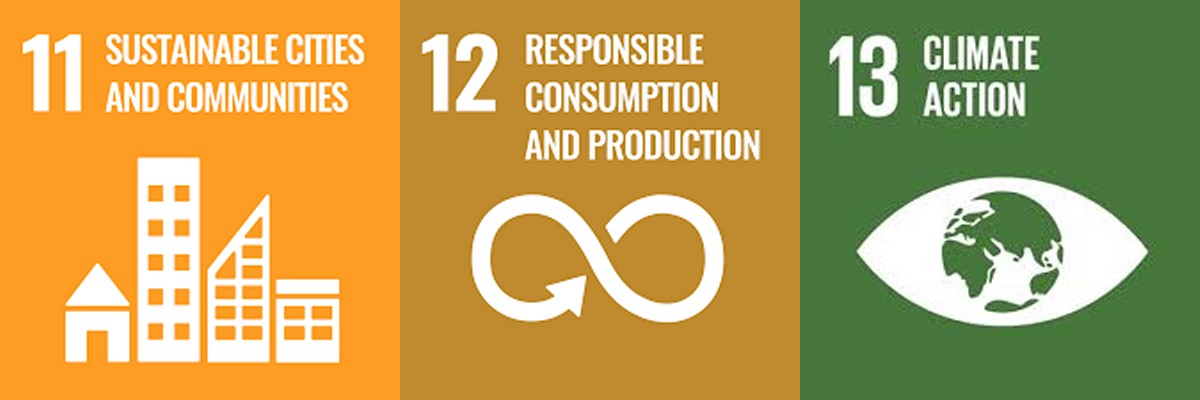
Urban circular economies are also mentioned in various significant goals. The United Nations created a set of objectives known as the Sustainable Development Goals (SDGs), some of which are supported by an urban circular economy:
By embracing these strategies, we can finally retire the outdated “take, make, throw away” culture for good.
Transportation and the Urban Circular Economy
Transportation is one way that cities reduce CO2 emissions, but it is also a fundamental part of an urban economy. Goods and people must move around and to and from cities, and even a circular economy would require transportation of goods to be refurbished or recycled. Therefore, understanding how to make urban transportation sustainable is a key aspect of these more environmentally friendly approaches. Some examples of benefits that green transportation could bring to smart cities include resource efficiency, accessibility and inclusion (see Knowledge Pill), and environmental resilience. All these factors would help individuals fit better into society, removing concerns about the consumption of fossil fuels and the need for expensive cars.
Green transportation would enhance resource efficiency because, according to Okonta10D. E. Okonta, “Smart Cities Software Applications for Sustainability and Resilience,” Heliyon 10, no. 10 (May 2024): e32654, https://doi.org/10.1016/j.heliyon.2024.e32654, green-powered transport options are more likely to be durable over time, making them more reliable and efficient for city dwellers. This focus on durability and longevity aligns perfectly with the principles of the circular economy, which seeks to keep resources in use for as long as possible, reducing waste and the need for new materials.
Furthermore, they would contribute to accessibility and inclusion by eliminating the issue of exclusive, fancy transportation for selected individuals. Instead, all citizens would be privileged with comfortable, fast, and reliable methods of transportation, often at little to no cost.
Finally, it would significantly boost environmental resilience by drastically decreasing the diffusion of greenhouse gases into the atmosphere, achieved through the elimination of fossil fuel-powered vehicles11Aditya Restu Hapriyanto and Hafidzul Azmi. “Implementation of Green Infrastructure in Sustainable Transportation in Supporting Urban Mobility: A Literature Review” Engineering Proceedings 84, no. 1: 25. 2025. https://doi.org/10.3390/engproc2025084025.
Real life example: Amsterdam
While there are many cities around the world adapting this approach12Ellen MacArthur Foundation, “Circular Economy Examples: Cities,” no date, https://www.ellenmacarthurfoundation.org/topics/cities/examples, Amsterdam is one that stands out. Amsterdam’s strategy is to become a circular city by reducing the use of new raw materials and resources. The city aims to halve new raw material consumption by 2030 and achieve full circularity by 2050 through over 70 actions focused on food waste, consumer goods, and the built environment. This strategy involves collaboration with residents, entrepreneurs, and various government levels, and progress will be monitored to ensure these ambitious goals are met13City of Amsterdam, “Circular Economy,” no date, https://www.amsterdam.nl/en/policy/circular-economy/.
Amsterdam has also incorporated the concept of “Doughnut Economics” into its aims at becoming a circular city. Developed by Kate Raworth, and based on the “Planetary Boundaries” framework (Johan Rockström) and social justice foundations, Doughnut Economics is a framework for achieving a thriving 21st-century society by meeting human needs while also respecting the environment and its finite resources. It introduces the “Doughnut” visual model, which has a few key aspects, as you can see in the model below:
- The Inner Hole (Social Foundation): This represents the basics everyone needs to survive—like food, water, housing, and energy. We don’t want anyone to fall into the “hole” of poverty, so a strong economy is still necessary.
- The Outer Ring (Ecological Ceiling): This represents the limits of our planet (like climate change and pollution). We don’t want to “overshoot” this ring and damage the Earth. This limitation is the “planetary boundaries” we mentioned before.
- The Doughnut (The Sweet Spot): The goal is for everyone to live in the green “doughnut” part—where human needs are met without destroying the planet14Doughnut Economics Action Lab, “About Doughnut Economics,” 2026, https://doughnuteconomics.org/about-doughnut-economics.
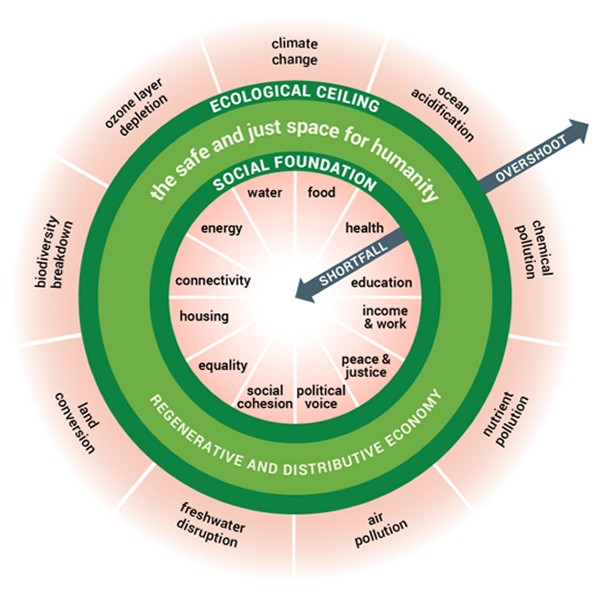 Figure 2: A diagram of the main social and environmental concepts of doughnut economics15Doughnut Economics Action Lab, “About Doughnut Economics”.
So, applying the approaches of a circular economy help cities achieve this perfect balance between human needs and respecting the Earth’s boundaries. Let’s look at the concepts of Doughnut Economics and how Amsterdam implements its “Amsterdam City Doughnut”:
Case Study – Oway
Oway is a cosmetics company located near Bologna, Italy. It serves as a compelling case study for the urban circular economy by pioneering a model known as agricosmetics, which prioritizes the total elimination of plastic and the promotion of conscious consumption. Central to their strategy is a commitment to using only medical-grade glass and aluminum for their packaging. These materials are chosen specifically for their infinite recyclability, ensuring that they can be reintegrated into the production cycle indefinitely without the quality degradation typically seen in recycled plastics. By moving away from the linear “take-make-waste” cycle, Oway effectively reduces the burden on municipal waste systems16Oway. “Packaging e Responsiblità”. Rolland. 2025. https://oway.com/pages/environmental-labels.
In addition to material choices, Oway addresses the environmental impact of urban distribution by eliminating secondary packaging. By removing unnecessary boxes and wrappers that consumers usually discard immediately, they significantly reduce the volume of waste generated at the point of use. Their circular philosophy extends to the products themselves, which are formulated as high-performance concentrates. These concentrated formulas require less water and smaller containers, leading to a lower carbon footprint during transportation and a more efficient use of resources within the supply chain17Oway. “Consumo Consapevole”. Rolland. 2025. https://oway.com/pages/environmental-labels.
A unique aspect of Oway’s circular model is its radical stance against traditional retail spikes. By choosing to close both their physical stores and e-commerce platform during Black Friday, the company actively discourages the impulsive overconsumption that characterizes modern urban life. This “anti-Black Friday” approach promotes a slower, more intentional relationship between the consumer and the product, aligning retail habits with environmental limits. Furthermore, their use of upcycled materials, such as paper derived from agricultural waste and regenerated cotton, demonstrates how a company can close the loop by turning production byproducts into valuable resources. Through these integrated efforts, Oway demonstrates that a circular transition requires a combination of material innovation, waste reduction, and a fundamental shift in consumer behavior18Oway. “Consumo Consapevole”. Rolland. 2025. https://oway.com/pages/environmental-labels.
To learn more about Oway and its philosophy, click here.
Ultimately, a smart city is a sustainable city. By integrating strategies like recycling, green transportation, and refill programmes, we can trigger a revolutionary transformation. This is more than just a “green” initiative; it is an upgrade to the way we live, moving us toward a restorative system where resources are managed with the future in mind.
For more information, see:
Bibliography
- C40 Cities Climate Leadership Group. “Circular Economy”. C40 Cities Knowledge. 2026. https://www.c40knowledgehub.org/s/topic/0TO1Q0000001lh0WAA/circular-economy?language=en_US
- Circularity Hub. “Linear = Waste. Circular = Future.” LinkedIn, November 2025. https://www.linkedin.com/posts/sustainability-infographics\_circulareconomy-sustainability-climateaction-activity-7376566479497940992-sKzX
- City of Amsterdam. “Circular Economy.” No date. https://www.amsterdam.nl/en/policy/circular-economy/
- CMCC. “Food waste: cities can make the difference.” October 19, 2020. https://www.cmcc.it/article/food-waste-cities-can-make-the-difference
- Doughnut Economics Action Lab. “About Doughnut Economics.” 2026. https://doughnuteconomics.org/about-doughnut-economics
- Ellen MacArthur Foundation, “Cities in the Circular Economy: An Initial Exploration”. 1 August, 2017. https://www.ellenmacarthurfoundation.org/cities-in-the-circular-economy-an-initial-exploration
- Ellen MacArthur Foundation. “Circular Economy Examples: Cities.” No date. https://www.ellenmacarthurfoundation.org/topics/cities/examples
- Ellen MacArthur Foundation. “Circular Economy Introduction: Overview.” No date. https://www.ellenmacarthurfoundation.org/topics/circular-economy-introduction/overview
- Enel. “The Circular Economy,” 2025. https://www.enelgreenpower.com/learning-hub/sustainable-development/circular-economy
- European Investment Bank. “A CATALOGUE of CIRCULAR CITY ACTIONS and SOLUTIONS the Circular City Centre -C3,” 2024. https://circulareconomy.europa.eu/platform/sites/default/files/2025-02/a-catalogue-of-circular-city-actions-and-solutions.pdf
- European Parliament. “Circular Economy: Definition, Importance and Benefits”, 24 May, 2023. https://www.europarl.europa.eu/topics/en/article/20151201STO05603/circular-economy-definition-importance-and-benefits
- Experts Vision Consultants. “Objectives of Smart Cities,” EVC, no date, https://evc.sa/en/objectives-of-smart-cities/#:~:text=Smart%20cities%20seek%20to%20improve,sustainability%20in%20the%20long%20run
- Hapriyanto, Aditya Restu, and Hafidzul Azmi. “Implementation of Green Infrastructure in Sustainable Transportation in Supporting Urban Mobility: A Literature Review” Engineering Proceedings 84, no. 1: 25. 2025. https://doi.org/10.3390/engproc2025084025
- OECD Urban Studies. “The Circular Economy in Cities and Regions”. OECD. 28 October 2020. https://www.oecd.org/en/publications/the-circular-economy-in-cities-and-regions_10ac6ae4-en.html
- Okonta, D. E. “Smart Cities Software Applications for Sustainability and Resilience.” Heliyon 10, no. 10. May 2024: e32654. https://doi.org/10.1016/j.heliyon.2024.e32654
- Oway. “Packaging e Responsiblità”. Rolland. 2025. https://oway.com/pages/environmental-labels
- Oway. “Consumo Consapevole”. Rolland. 2025. https://oway.com/pages/environmental-labels
- Sharifi, Ayyoob, Zaheer Allam, Simon Elias Bibri, and Amir Reza Khavarian-Garmsir. “Smart cities and sustainable development goals (SDGs): A systematic literature review of co-benefits and trade-offs.” Cities 146 (2024): 104659. https://www.sciencedirect.com/science/article/pii/S0264275123004717
- UN Habitat. “Urban Energy,” 2026. https://unhabitat.org/topic/urban-energy