

Accessibility and Inclusion in Smart Cities
A truly “Smart City” is defined not only by its digital infrastructure but by its ability to be inclusive, equitable, and responsive to the needs of all its citizens. While technology acts as a tool to optimise assets and services, its ultimate goal is to improve the overall well-being and participation of every resident, regardless of their physical ability, age, or socioeconomic status.
What do we mean by an “inclusive city”?
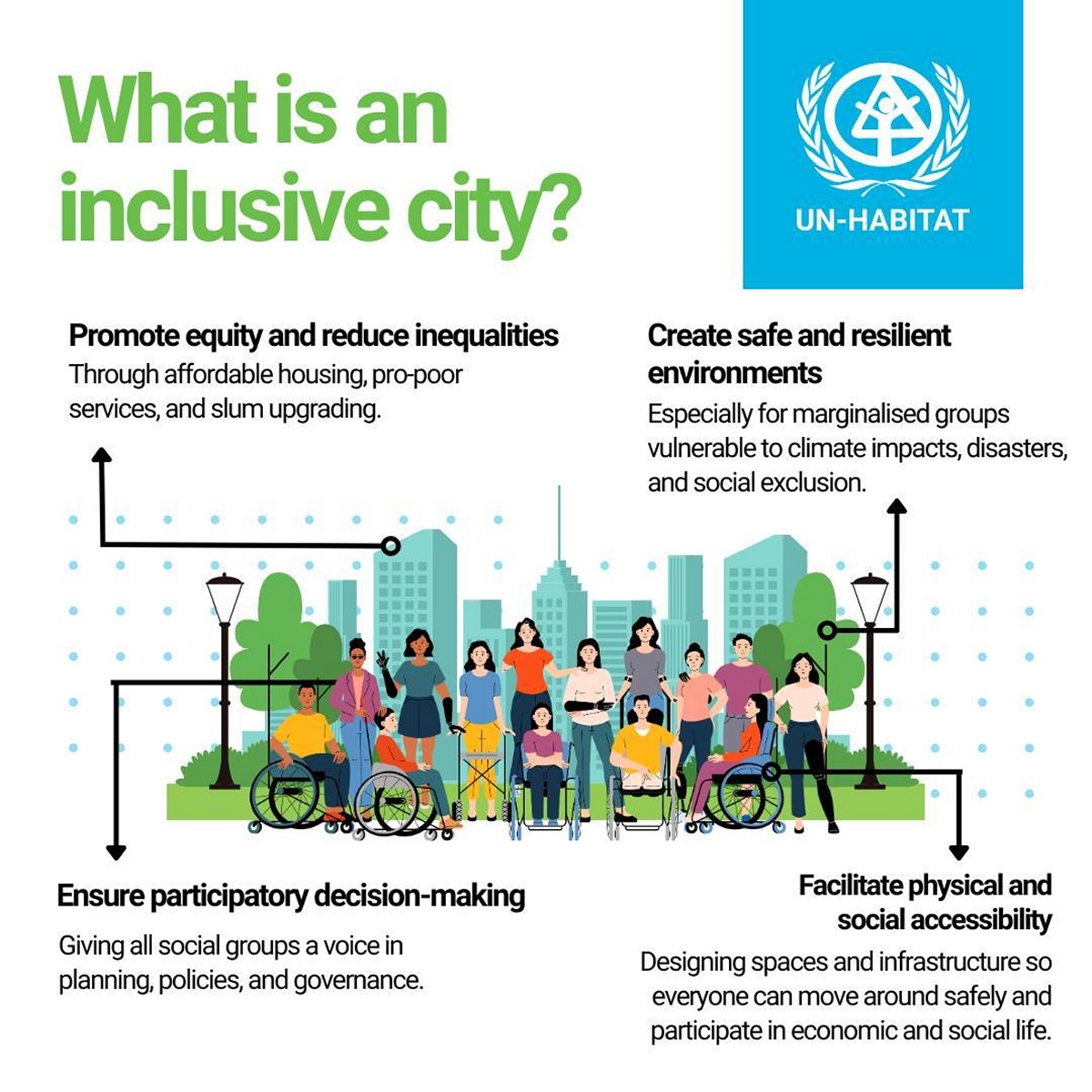
The infographic above1UN-Habitat, “Inclusive cities are urban areas planned, governed, and managed…” Facebook, 2018 shows the pillars of creating an inclusive city, according to the UN, but how do these concepts connect with and integrate into a smart city?
Designing for Every Citizen
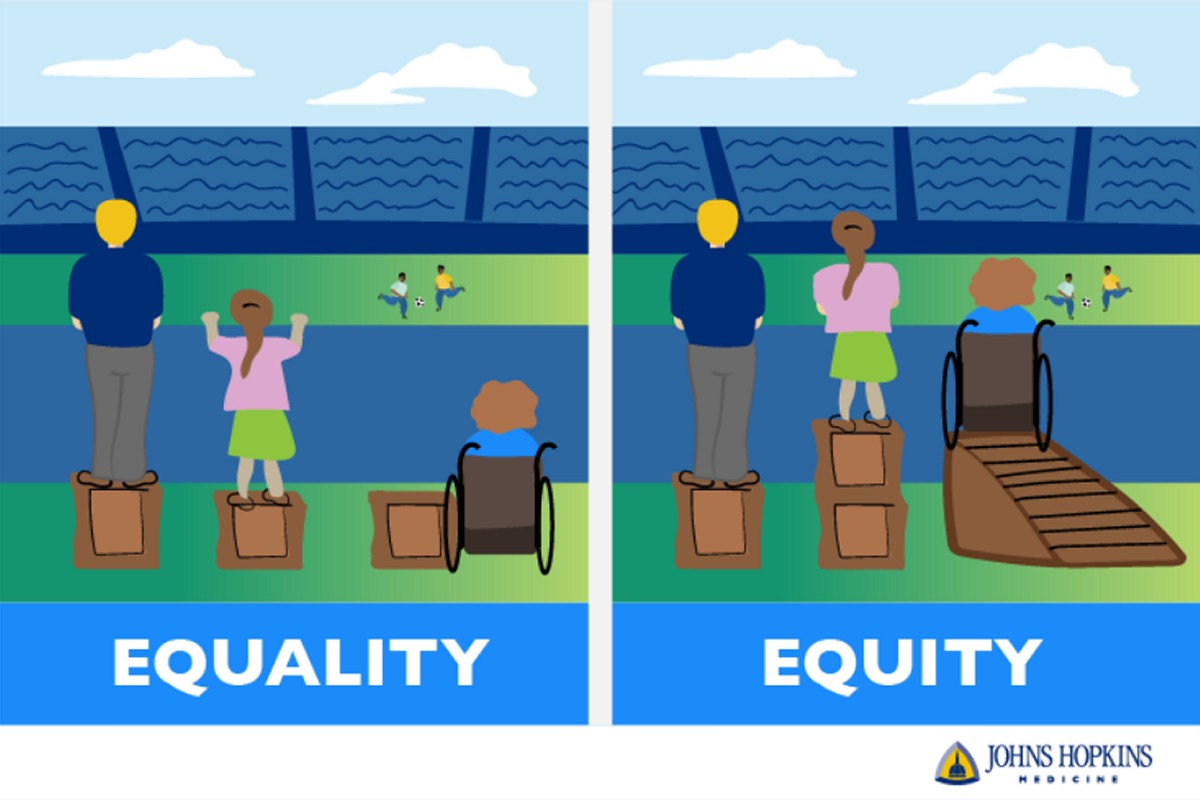
While the terms “equality” and “equity” sound similar, they mean very different things. Equality means giving everyone the exact same thing, like providing the same number of public benches on every street. Equity, however, means giving people what they need to achieve the same result. In a Smart City, this means understanding that some residents—like those with mobility issues, the elderly, or those living in low-income areas—need different or additional resources (such as specific transport options or closer public services) to participate fully in city life. True accessibility and inclusion are focused on achieving equity, not just equality, by adjusting the design to meet individual needs2Asheanna Lee, “Health Equality vs. Health Equity,” PAHS Blog, January 31, 2024, https://www.healthstewardship.org/blog/health-equality-vs-equity.
At the heart of inclusive urban planning is the recognition that cities are reflections of human progress and must prioritize people at the center of their design3UN-Habitat, “People-Centered Smart Cities,” United Nations Human Settlements Programme, accessed June 22, 2026, https://unhabitat.org/programme/legacy/people-centered-smart-cities. Smart cities leverage data and digital tools to identify and remove barriers that have historically excluded certain groups. This includes:
- Inclusive Mobility: Developing transportation systems that are safe, cleaner, and more accessible. For example, the use of real-time data can help optimize public transport routes and provide precise information for those with mobility challenges. Accessibility integrations into Google Maps, such as the wheel-chair accessible route option or the screen reader option in Lens, help cities become more accessible to all. There are also other apps, such as Be My Eyes, that combine volunteers with those in need to help everyone navigate the world around them through technology4Southeast ADA Center, “These Apps Help People with Disabilities Travel More Easily,” October 22, 2024, https://adasoutheast.org/these-apps-help-people-with-disabilities-travel-more-easily/.
- Social Equity in Public Spaces: Public spaces – parks, museums, squares, beaches, etc – are where social cohesion and integration can flourish and grow5Sheinya Joseph, “Social Equality in the Design of Public Spaces,” Little Online Insights, August 28, 2024, https://www.littleonline.com/insights/social-equality-in-the-design-of-public-spaces/. They are places where people can come together, feel that they are part of a team, share responsibility for their community and feel a strong bond with their neighbors. Transforming urban areas into “child-friendly” and healthier places where citizens can reconnect with nature and each other is a significant part of this goal. Smart urban planning aims to balance community needs with environmental goals, ensuring that green spaces6Mark J. Nieuwenhuijsen, “Why More Green Space Is Essential for Cities,” ISGlobal Health Is Global Blog, October 28, 2021, https://www.isglobal.org/en/healthisglobal/-/custom-blog-portlet/why-more-green-space-is-essential-for-cities/4735173/0 and public services are distributed equitably across the city. This means that the cities should have public spaces that are safe, welcoming and accessible to all ages, abilities and socio-economic backgrounds, with an equitable distribution throughout the urban layout of a city.
The Role of Digital Participation
Technology serves as a vital bridge for enhancing transparency and democratic participation in local governance. Digital platforms, such as the Decidim app first developed in Barcelona7Paolo Cardullo, Ramon Ribera-Fumaz, and Paco González Gil, “The Decidim ‘Soft Infrastructure’: Democratic Platforms and Technological Autonomy in Barcelona,” Computational Culture 9 (July 2023), http://computationalculture.net/the-decidim-soft-infrastructure/, allow citizens to directly propose ideas, vote on local projects, and track government actions. These tools empower individuals who might otherwise be marginalized, giving them a direct voice in how their neighborhoods are developed and how resources are allocated.
Listen/watch this podcast on the Decidim project:
For more information on data collection in cities, see this Knowledge Pill.
The Digital Divide
The digital divide poses a significant challenge in smart cities by risking the exclusion of residents—particularly based on socioeconomic status, age, or disability—when new technologies are introduced. For example, the use of QR codes at restaurants eliminates a significant amount of paper and is great for the environment. On the other hand, people who do not have a newer phone that can scan QR codes, or older people who may not be familiar with the technology, may then be excluded from using these digital menus or may struggle to access the information. To ensure technology acts as an inclusive tool, urban planning must adopt a holistic, system-based approach that prioritizes improving the digital literacy of all citizens. So local governments need to treat the digital divide as an interconnected problem and simultaneously address both access to technology and the digital literacy of all citizens to ensure technology is an inclusive tool. Solutions involve providing “digital public goods” that are open, transparent, and accessible to marginalized groups, a principle championed by the UN-Habitat: People-Centered Smart Cities Flagship Programme8UN-Habitat, “People-Centered Smart Cities”. Furthermore, international bodies like the International Telecommunication Union (ITU) provide technical standards and guidelines specifically for making city apps and digital services accessible to persons with disabilities and the elderly9International Telecommunication Union (ITU), “About The International Telecommunication Union (ITU),” accessed June 22, 2026, https://www.itu.int/en/about/Pages/default.aspx. The aim is to ensure that certain groups who do not have access to technology or do not have the technical background needed to use it are not excluded as Smart Cities develop.
Real-World Impact: The Human Perspective
Inclusive smart city strategies often target specific urban challenges, such as:
- Fighting Energy Poverty: Ensuring all residents have economic access to sustainable energy choices. (link to Energy KP)
- Enhancing Safety: Using real-time alerts and sensors to make cities safer and more responsive to emergencies for all citizens. (Link to safety KP).
As highlighted in the UN’s Sustainable Development Goal 11, the mandate for modern governments is to make human settlements “inclusive, safe, resilient, and sustainable”. A “smart” city is one that continues to adapt its physical and social structures to meet these evolving human values.
Case study: Ljubljana
In 2018, Ljubljana won the silver medal winner of the Accessible Cities Award for developing its accessibility policies to ensure an equal participation in society for older people, as well as for people with disabilities. During the EUROCITIES study visit in Ljubljana, cities learnt in practice from the host city’s model of accessibility solutions for all ages. Check out this video to learn more:
A successful smart city transcends mere technological efficiency; it is fundamentally an equitable city. The integration of digital tools must be intentionally channeled toward designing inclusive mobility, ensuring social equity in public spaces, and actively bridging the digital divide that threatens to marginalize vulnerable residents. As demonstrated by global policy frameworks and real-world examples from cities like Ljubljana and Barcelona, the path forward requires prioritizing the human perspective—using data and technology not as an end in itself, but as a powerful means to fulfill the mandate of SDG 11: making human settlements truly inclusive, safe, resilient, and sustainable for everyone.
For more information:
International Policy Frameworks & Guidelines
These sources provide the global “standard” for what makes a city inclusive.
- UN-Habitat: People-Centered Smart Cities Flagship Programme
- The Resource: People-Centered Smart Cities – UN-Habitat
- Key Insight: This program provides “Playbooks” for local governments to bridge the digital divide. It emphasizes that smart cities must provide “digital public goods” that are open, transparent, and accessible to marginalized groups.
- ITU (International Telecommunication Union): Digital Inclusion of All
- The Resource: Digital Inclusion of All – ITU
- Key Insight: As the UN agency for ICTs, the ITU provides technical standards and guidelines on making digital services (like city apps and kiosks) accessible to persons with disabilities and the elderly.
- United Nations: SDG 11 – Sustainable Cities and Communities
- The Resource: Goal 11 Monitoring and Disability Inclusion
- Key Insight: This brief outlines how universal design in public transport and housing is a prerequisite for achieving the UN Sustainable Development Goals.
Practical Case Studies & Best Practices
These links provide concrete examples of the “inclusive” technologies mentioned in your article.
- Barcelona & Decidim: A Model for Digital Sovereignty
- The Resource: The Decidim ‘soft infrastructure’ Case Study
- Key Insight: A deep dive into how Barcelona moved away from a “tech-first” approach to a “citizen-first” model using open-source software to facilitate radical democracy and participatory budgeting.
- Inclusive Cities for All: Good Practices Library
- The Resource: Inclusive Cities for All – EU Case Studies
- Key Insight: A collection of European city examples, such as Helsinki’s “Agents of Joy” (empowering people with disabilities to lead city activities) and Ljubljana’s mental wellbeing programs for youth.
- Smart Cities Library: 7 Ways to Use Technology for Accessibility
- The Resource: Smart City Accessibility Planning
- Key Insight: A practical list of how technology can be used for “drop-free” parking, terrain mapping for wheelchair users, and real-time traffic control to help pedestrians and cyclists.
Technical Research & Checklists
For a more academic or professional backing:
- Towards Smart and Inclusive Cities for Persons with Disabilities
- The Resource: ResearchGate Paper: Inclusive City Checklists
- Key Insight: This paper provides a “design checklist” for urban planners, covering physical obstructions, signage, and the retrofitting of traditional assistive technologies with new smart features.
Bibliography
- Cardullo, Paolo, Ramon Ribera-Fumaz, and Paco González Gil. “The Decidim ‘Soft Infrastructure’: Democratic Platforms and Technological Autonomy in Barcelona.” Computational Culture 9 (July 2023). http://computationalculture.net/the-decidim-soft-infrastructure/
- International Telecommunication Union (ITU). “About The International Telecommunication Union (ITU).” Accessed June 22, 2026. https://www.itu.int/en/about/Pages/default.aspx
- Joseph, Sheinya. “Social Equality in the Design of Public Spaces.” Little Online Insights, August 28, 2024, https://www.littleonline.com/insights/social-equality-in-the-design-of-public-spaces/
- Lee, Asheanna. “Health Equality vs. Health Equity.” PAHS Blog, January 31, 2024. https://www.healthstewardship.org/blog/health-equality-vs-equity
- Nieuwenhuijsen, Mark J. “Why More Green Space Is Essential for Cities.” ISGlobal Health Is Global Blog, October 28, 2021. https://www.isglobal.org/en/healthisglobal/-/custom-blog-portlet/why-more-green-space-is-essential-for-cities/4735173/0
- Southeast ADA Center. “These Apps Help People with Disabilities Travel More Easily.” October 22, 2024. https://adasoutheast.org/these-apps-help-people-with-disabilities-travel-more-easily/
- UN-Habitat. “Inclusive cities are urban areas planned, governed, and managed…” https://www.facebook.com/UNHABITAT/posts/inclusive-cities-are-urban-areas-planned-governed-and-managed-in-ways-that-ensur/1160520259444389/
- UN-Habitat. “People-Centered Smart Cities.” United Nations Human Settlements Programme. Accessed June 22, 2026. https://unhabitat.org/programme/legacy/people-centered-smart-cities