

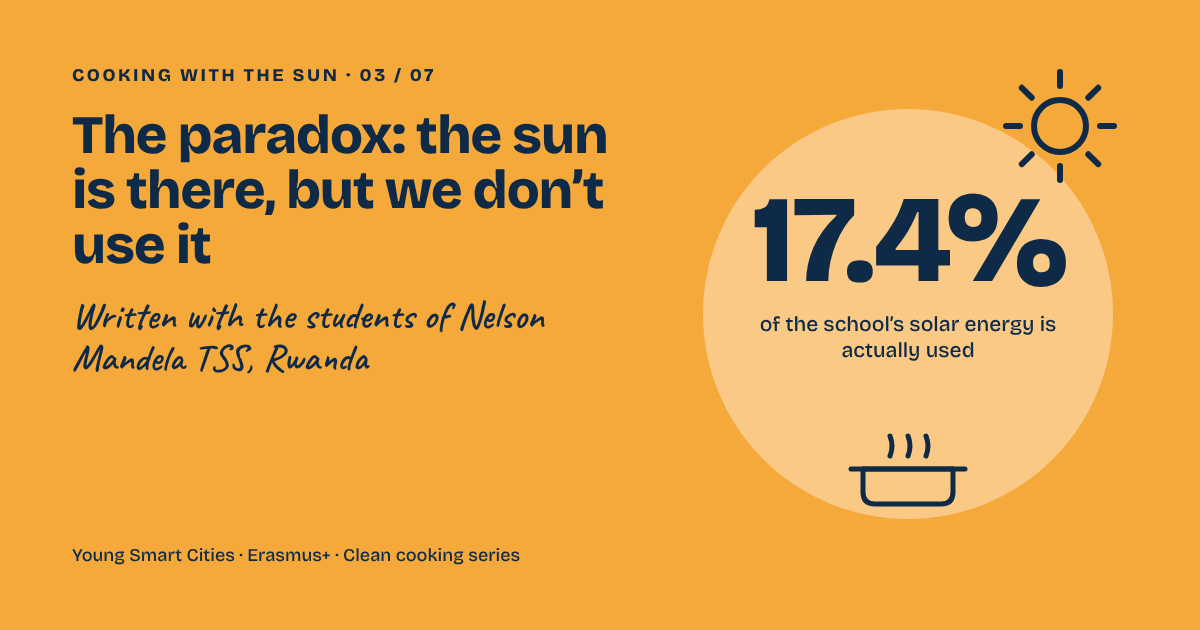
The school uses only 17.4% of the energy its panels produce. The rest goes unutilized.
Nelson Mandela Technical Secondary School currently operates a 45 kWp photovoltaic installation distributed across three distinct inverter systems. Benefiting from high local solar irradiance (averaging 5.04 kWh/m²/day), the solar fleet generates an impressive 63,712 kWh per year .
In contrast, the school’s total annual electricity consumption for lighting, computers, and equipment is only 11,106 kWh—representing just 17.4% of total generation . This leaves a massive annual solar surplus of 52,606 kWh (82.6% of generated power) completely unutilized .
| Inverter Microgrid | PV Capacity | Annual Solar Output | Share of Total Generation |
| Deye Hybrid Inverter | 27 kWp | 38,227 kWh | 60.0% |
| Fronius Symo Inverter | 10 kWp | 14,158 kWh | 22.2% |
| Victron Energy Microgrid | 8 kWp | 11,327 kWh | 17.8% |
Seasonal analysis confirms that generation remains stable year-round. The lowest output month is November (4,808 kWh), while peak production occurs in August (5,891 kWh). Even after applying a realistic system loss factor of 1.3, the net surplus remains more than sufficient to cover institutional cooking power requirements in every month of the academic year.
The conclusion is clear: transitioning to clean electric cooking does not require buying new power generation . It only requires utilizing the clean energy already available on the roof.
| “We hooked up multimeters, logged daily data from the Deye, Fronius, and Victron inverters, and factored in realistic system losses. The numbers proved beyond doubt that our solar surplus is more than enough.” — Bienvenue Mwenadamu, Group leader . |
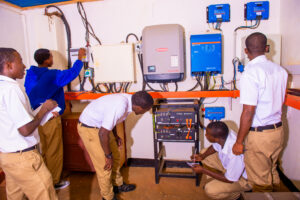
:Students logging data from the PV system