

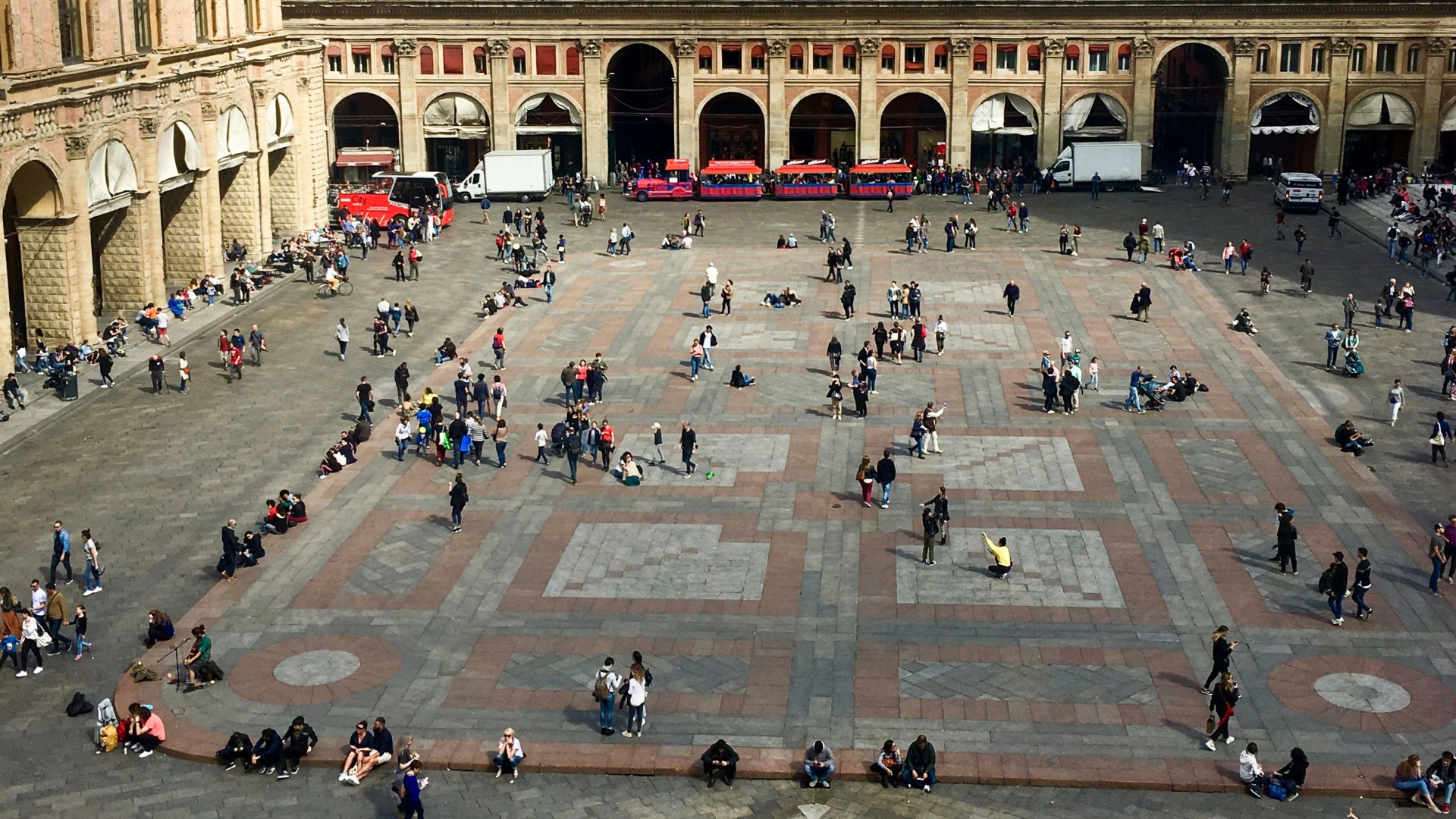
If you have ever walked through the centre of Bologna during July or August, you already know the feeling: the sun beats down, and the historic red buildings and asphalt surfaces act like a giant oven, absorbing and trapping heat. This is known as the urban heat island effect, and it makes our city centre incredibly hot.
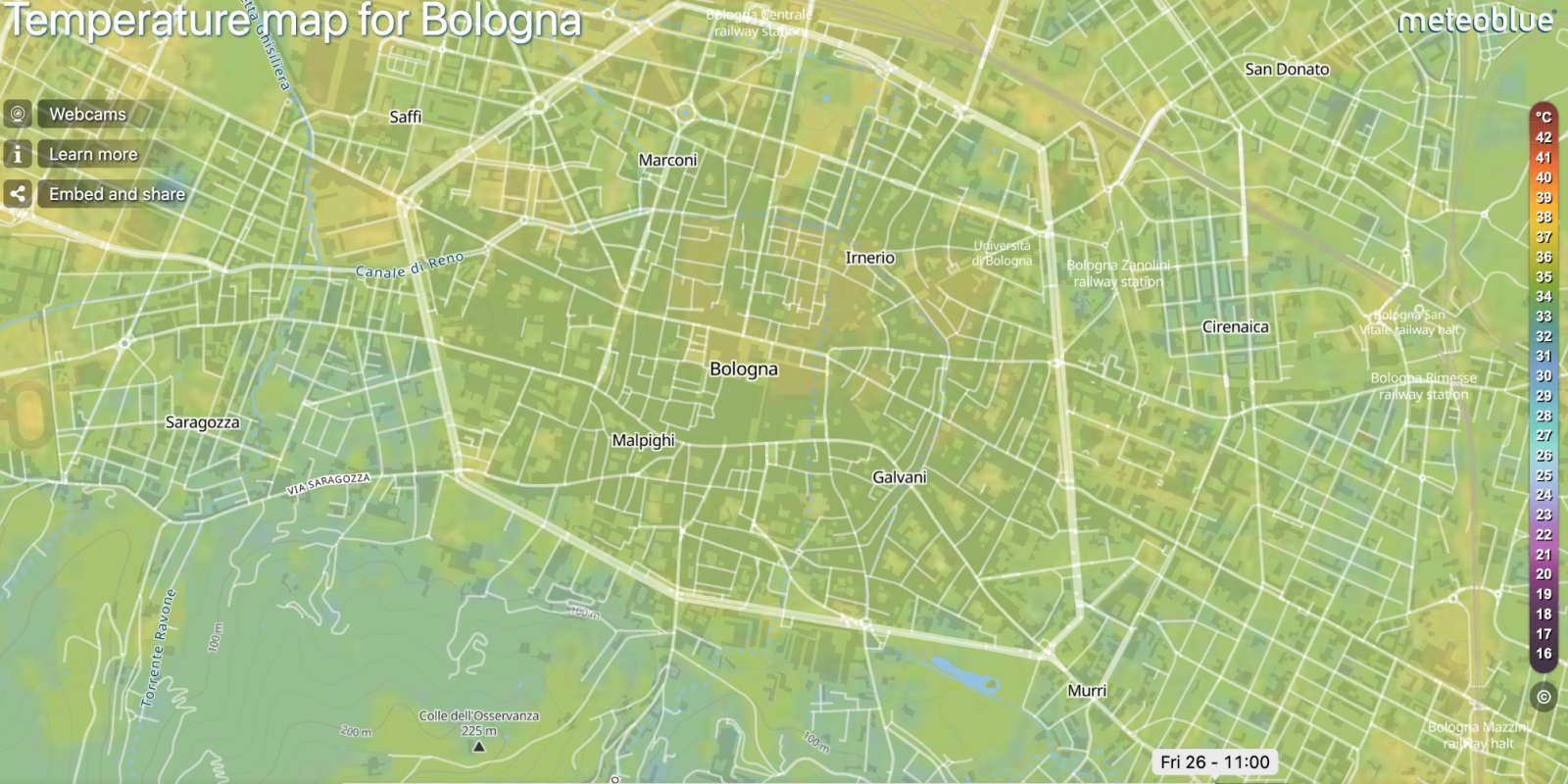
Figure 1: Heatmap for Bologna, Meteoblue 2026
In a massive public space like Piazza Maggiore, there isn’t a single tree to provide shade; our only escape from the heat is under the porticos or in a bar. As part of our school project to explore how urban greening can combat this issue, Grade 8 decided to investigate just how bad the heat problem is—and design a smart, green solution for the future.
Our Process: From Fieldwork to 3D Models
To understand the power of urban greenery, we took action through a mix of fieldwork and digital design:
- The Temperature Experiment: We travelled to Parco San Mamolo to measure the temperature under the trees, and then took measurements in Piazza Maggiore. The results were shocking: the park was 4°C cooler than the open piazza!
- Global Inspiration: Realising how much trees help, we researched existing green piazzas across Italy and around the world to see what makes them attractive and functional for citizens. We also conducted secondary research on how urban plants reduce temperatures and improve our mental well-being.
- Collaborative Design: In groups, we designed multiple concepts for a new, greener Piazza Maggiore, borrowing the best features from our global research. We presented our ideas to one another and combined our absolute best features into a final, master sketch.
- Bringing it to Life in 3D: To visualise our ideas, we built 3D models of our green piazza using Autodesk’s Tinkercad and Minecraft. Afterwards, we evaluated each other’s designs to highlight strengths and areas for improvement.
Our Proposal: A Smart, Green Piazza Maggiore
Our final design reimagines Piazza Maggiore not as a barren concrete heat-trap, but as a living, breathing ecosystem. Our realistic solutions include strategic tree canopies for shade, local plant species, and integrated seating that allows people to gather comfortably without overheating.
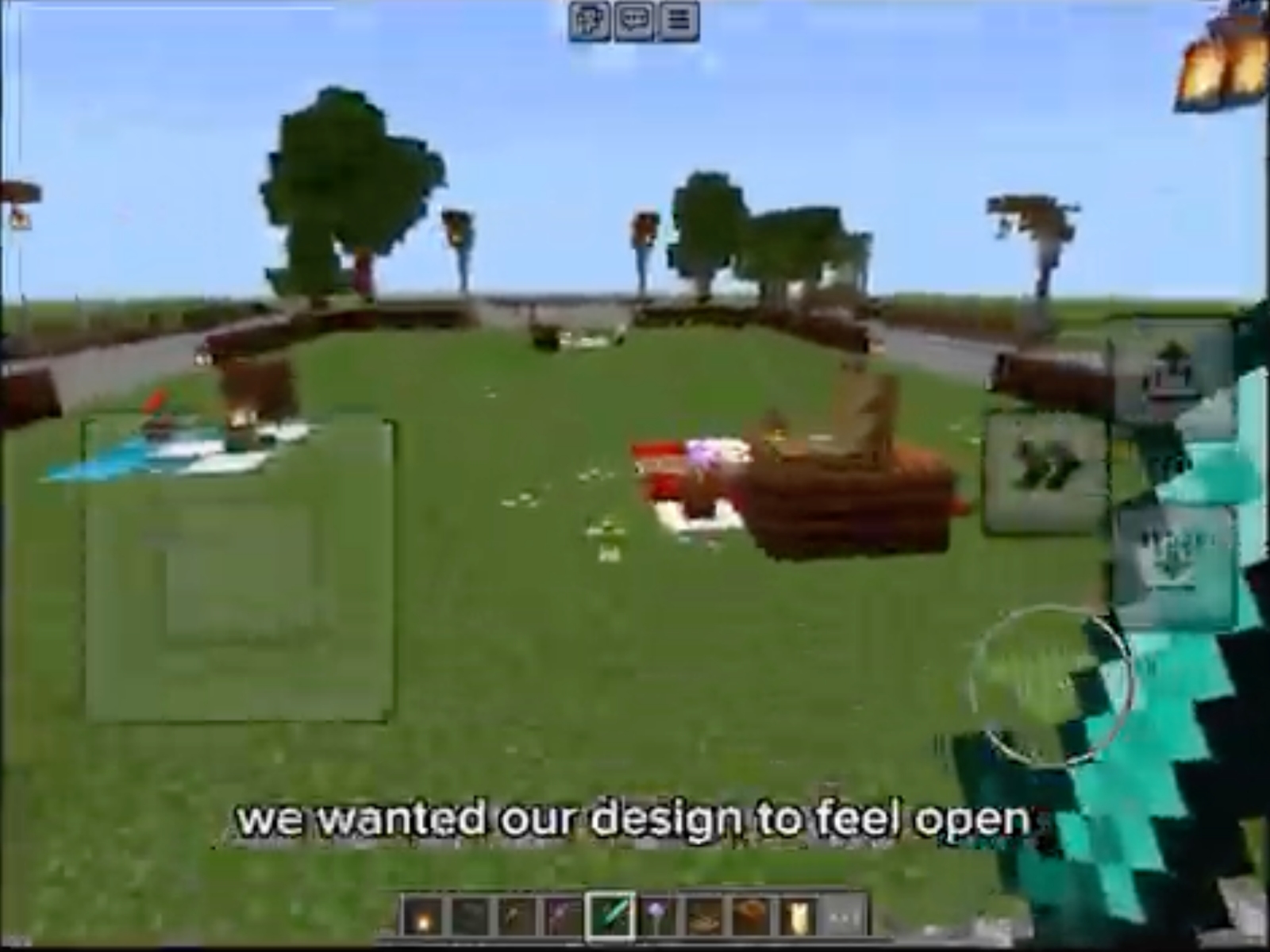 Figure 2: Students work in Minecraft
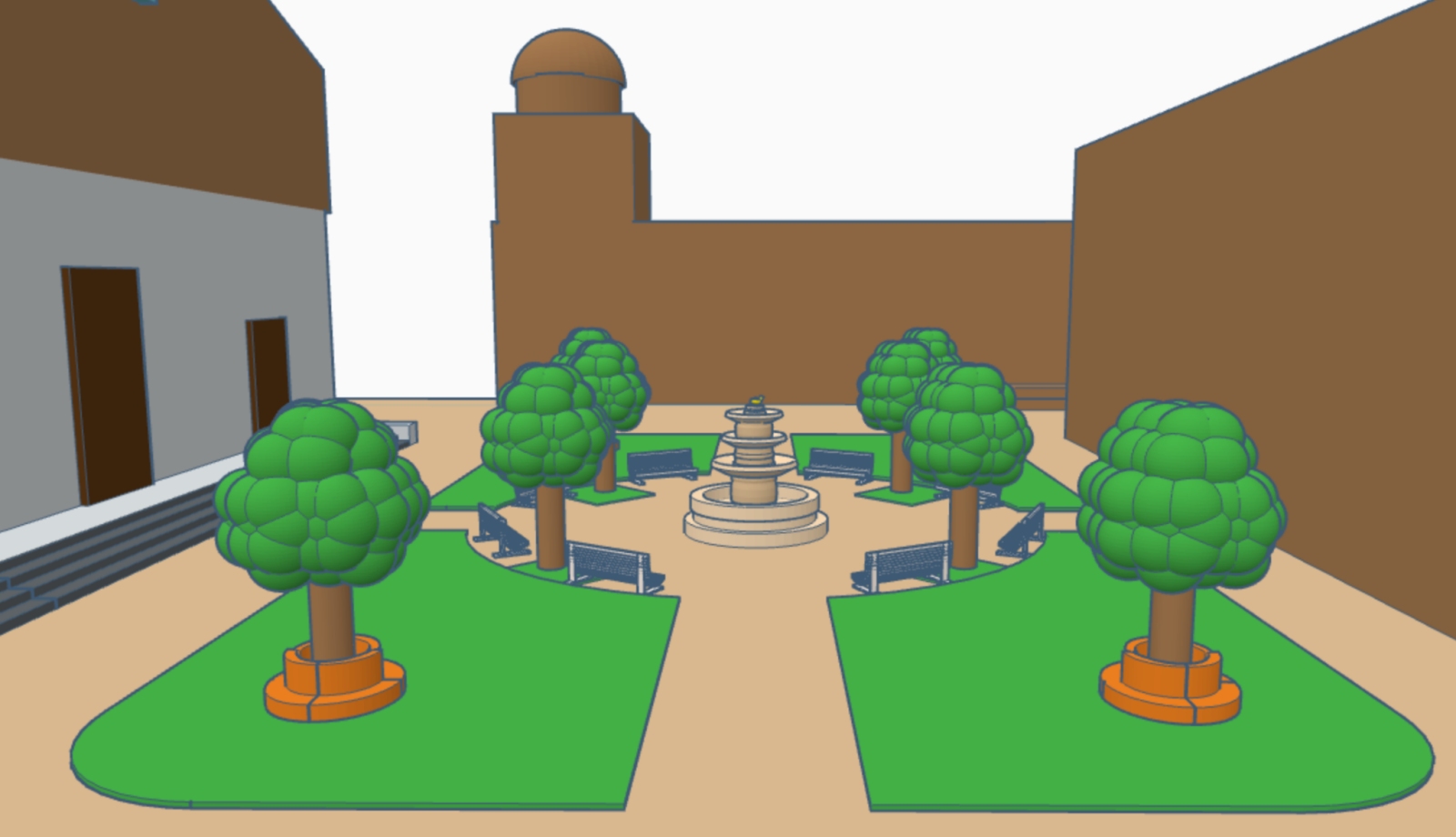
Figure 3: Student’s work on Tinkercad
Bologna has an ambitious goal to become a carbon-neutral city by 2030. The Comune (town council) has already shown interest in greening the square in the past by temporarily placing small trees there. Our project proves that a permanent, deeply integrated urban greening strategy is exactly what the city needs to reach its climate goals and protect its citizens.